Socking it to the fox and the box
by Brighton Council
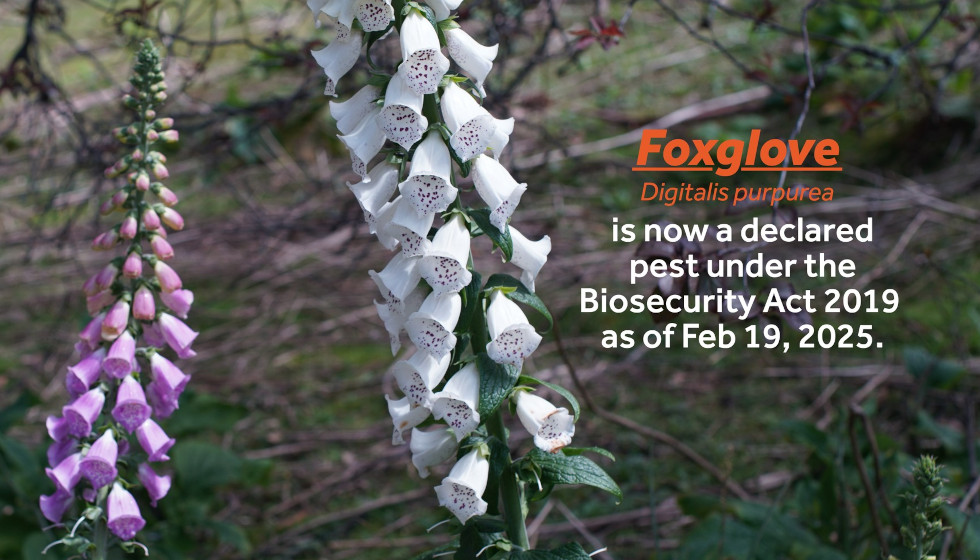
Want to help control wayward weeds and be part of science in action? Here’s what to know about two common weeds.
In 2025, common foxglove (Digitalis purpurea) was declared a weed under the Biosecurity Act 2019. This puts common foxglove and other non-sterile varieties in the same category as other troublesome weeds such as African boxthorn, blackberry and gorse.
Foxglove is highly toxic and spreads rapidly producing thousands of tiny seeds. In Brighton, the only known foxglove infestation is in the Dromedary area. If you have foxglove on or around your property you can help us work towards eradication.
African boxthorn is another bad weed. Widespread in Brighton, its sharp thorn-covered branches pose risks to people, pets and tyres, limiting access to property and places, making it difficult to handle and control.
Scientists from the CSIRO have been leading the African Boxthorn biocontrol & Drought Resilience project. This nation-wide project aims to suppress the invasive weed through the release of the rust fungus Puccinia rapipes.
Leaves and fruit of infected plants are weakened, reducing its ability to spread. While this approved biocontrol agent is not a silver bullet, it is another tool to tackle this invasive weed.
Landcare Tasmania is inviting community members to get involved in the release program. Visit their website for more information: www.landcaretas.org.au